
SPEAKING. SPONSORSHIP & EXPO OPPORTUNITIES: SECURE YOUR POSITION ON THE PROGRAMME & EXHIBITION FLOOR

Logo with THE EVTOL SHOW in large white letters and Barcelona in orange cursive beneath.
SkydriveSkydrive
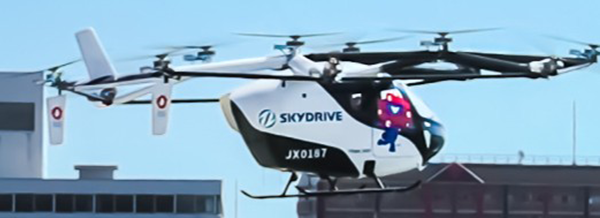
SkyDrive
SkyDrive is one of the world's leading Advanced Air Mobility companies and among the few eVTOL developers actively working at the intersection of aircraft development, operational deployment, infrastructure integration, and commercial service readiness.

While much of the global eVTOL sector remains focused on certification and vehicle development, SkyDrive has established itself as a leader in the practical implementation of Urban Air Mobility ecosystems. Through extensive collaboration with government authorities, transport operators, infrastructure developers, airports, regulators, and mobility stakeholders, the company has gained valuable real-world experience in the challenges associated with introducing eVTOL services into complex urban and regional transportation networks.

SkyDrive has played a central role in several of Japan's most significant Urban Air Mobility initiatives. Working alongside the Tokyo Metropolitan Government, Mitsubishi Estate, Kanematsu, and infrastructure partners, the company has supported public demonstration programmes and operational trials designed to explore not only aircraft operations, but also passenger processing, terminal design, vertiport concepts, public acceptance, and the integration of eVTOL services into existing urban mobility systems.

The company is also recognised for its pioneering work with Japan's major transportation operators, including partnerships with rail organisations such as JR East, JR Kyushu, Osaka Metro, and Kintetsu Railway. These initiatives are helping to define how future eVTOL services can be integrated into established public transportation networks, transforming existing mobility hubs into multimodal transport ecosystems that connect rail, aviation, and urban mobility services.

Beyond metropolitan deployment, SkyDrive has worked with regional governments and transportation stakeholders to evaluate future commercial routes, infrastructure requirements, vertiport locations, operational frameworks, and service models capable of supporting sustainable eVTOL operations. These projects provide valuable insight into the practical realities of route development, stakeholder coordination, infrastructure planning, and long-term commercial viability.

SkyDrive's participation in high-profile programmes such as Expo 2025 Osaka further demonstrates its commitment to advancing operational readiness, public engagement, infrastructure development, and commercial deployment. Through demonstration flights, stakeholder collaboration, passenger experience initiatives, and vertiport activities, the company continues to contribute valuable lessons on how Urban Air Mobility can evolve from demonstration projects into routine transportation services.

As the industry increasingly shifts its attention from aircraft certification toward infrastructure deployment, ecosystem integration, operational readiness, and commercial service entry, SkyDrive brings a uniquely valuable perspective shaped by real-world projects, public-private partnerships, transportation integration programmes, and some of the most advanced Urban Air Mobility implementation initiatives currently underway anywhere in the world.

At THE EVTOL SHOW BARCELONA, SkyDrive contributes practical expertise on multimodal transport integration, vertiport planning, stakeholder alignment, passenger operations, public acceptance, infrastructure deployment, and the pathway from demonstration programmes to scalable commercial Urban Air Mobility networks.
EHangEHang
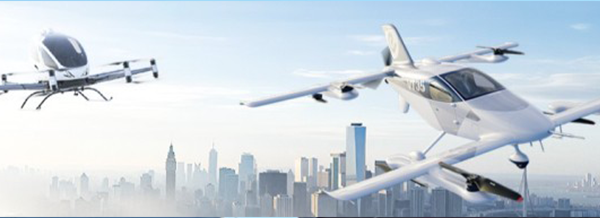
EHang
EHang is one of the world's most experienced Urban Air Mobility ecosystem developers and a global leader in the deployment of autonomous eVTOL operations.

Unlike many companies focused primarily on aircraft development, EHang has spent the past decade building the operational, infrastructure, regulatory, and ecosystem foundations required to introduce Urban Air Mobility services into real-world environments.

Through thousands of autonomous flight operations, passenger-carrying demonstrations, city deployment programmes, infrastructure initiatives, and commercial service projects, EHang has developed unique expertise in the challenges associated with operating and scaling autonomous air mobility networks. The company's work spans fleet supervision, command-and-control systems, vertiport integration, passenger operations, airspace management, public acceptance, and the development of operational frameworks capable of supporting future autonomous transportation services.

EHang's experience extends across multiple international markets, where the company has worked closely with governments, regulators, cities, infrastructure providers, transportation operators, and aviation stakeholders to explore how Urban Air Mobility can be integrated into existing transportation systems. This includes the planning and deployment of operational concepts, infrastructure requirements, emergency response applications, tourism services, and commercial operating models designed to support routine eVTOL operations.

Within Europe, EHang has established itself as one of the most active Urban Air Mobility participants, working alongside regulators, air navigation service providers, infrastructure operators, airports, technology partners, and public authorities to advance the practical deployment of Advanced Air Mobility services. The company has collaborated with ENAIRE, Spain's national air navigation service provider, to support the development of U-Space and future airspace integration frameworks, helping to address one of the most critical challenges facing large-scale Urban Air Mobility deployment across Europe.

Spain has become a particularly important market within EHang's European strategy. Through partnerships with infrastructure operator Globalvia and participation in multiple city-level deployment initiatives, EHang has contributed to the development of operational concepts, infrastructure planning activities, business models, and implementation strategies designed to support future Urban Air Mobility services throughout the Iberian Peninsula. These projects have provided valuable insight into how autonomous aircraft operations can be integrated into broader transportation networks and supported by the infrastructure required for routine service delivery.

The company has also participated in collaborative programmes involving municipalities, airports, emergency response organisations, U-Space providers, and mobility stakeholders across Spain, helping to demonstrate how autonomous aircraft can support passenger transport, emergency services, logistics, and regional connectivity applications. Through initiatives such as U-SAVE and other European deployment projects, EHang has gained practical experience in the operational, regulatory, and infrastructure requirements necessary to support autonomous air mobility services in complex urban environments.

For Barcelona and the wider Catalonia region, many of the challenges being addressed by EHang today are directly relevant to the future deployment of Urban Air Mobility services. Questions surrounding airspace integration, autonomous operations, vertiport infrastructure, passenger handling, public acceptance, network management, and multimodal transportation integration sit at the heart of both EHang's experience and the future development of Urban Air Mobility ecosystems across Europe.

At THE EVTOL SHOW BARCELONA, EHang brings valuable insight from some of the world's most advanced autonomous Urban Air Mobility initiatives, offering practical lessons on how cities, regulators, infrastructure providers, operators, and technology developers can work together to move Urban Air Mobility from demonstration programmes to scalable commercial operations.

EA Maven
EA Maven is not an aircraft manufacturer, operator, or infrastructure developer. They are one of the few consultancies in the AAM sector that specializes in answering a fundamental question:

"Where should eVTOL services actually operate, what infrastructure is required, and does the business case work?"

EA Maven is focused on one of the most critical challenges facing the industry: transforming aircraft capability into commercially viable transportation networks.

Working with OEMs, airports, airlines, governments, investors, infrastructure developers, and mobility stakeholders, EA Maven supports the planning and development of future Urban Air Mobility ecosystems through demand modelling, route assessment, vertiport planning, infrastructure design, network development, fleet sizing, scheduling analysis, energy demand forecasting, and investment due diligence.

As the industry increasingly shifts its focus from aircraft development toward deployment and operations, EA Maven provides the analytical frameworks and decision-making tools required to determine where Urban Air Mobility services should launch, how networks should be designed, what infrastructure is required, and whether future operations can be delivered sustainably and profitably.

The company has supported a range of significant Advanced Air Mobility initiatives globally.

This includes the development of large-scale Urban Air Mobility network strategies in the Middle East, involving more than 20 vertiports and 150 eVTOL aircraft, where the company assessed operational concepts, transport integration opportunities, fleet scheduling requirements, infrastructure deployment strategies, and future energy demand.

EA Maven has also conducted route planning and infrastructure studies for leading eVTOL manufacturers, including Vertical Aerospace, evaluating route opportunities, landing site requirements, fleet demand, revenue potential, vertiport energy consumption, and long-term infrastructure requirements. Through these projects, the company assessed network scenarios requiring more than 270 aircraft while helping stakeholders understand the operational and infrastructure implications of large-scale deployment.

The company's expertise has further been recognised through its involvement in the UK Government's Future Flight Challenge, where EA Maven was engaged to assess the viability of Advanced Air Mobility services across multiple regions using proprietary demand modelling and market assessment methodologies.

EA Maven brings a uniquely valuable perspective to the discussion around infrastructure and operations. While much of the industry focuses on aircraft performance and certification, EA Maven focuses on the questions that ultimately determine whether Urban Air Mobility succeeds commercially: Which routes make economic sense? Where should vertiports be located? How many aircraft are required? How much charging infrastructure and electrical capacity is needed? Which cities are ready for deployment? And ultimately, can the network operate sustainably and profitably?

Their expertise sits directly at the intersection of infrastructure planning, operational readiness, network design, and commercial viability — making EA Maven an important contributor to the conversations shaping the future of Urban Air Mobility deployment worldwide.
CAECAE
CAE
CAE sit on the operations side of the ecosystem and are one of the few companies actively working on the human, operational, and simulation infrastructure required to make eVTOL services scalable.

CAE is the world's largest aviation training and simulation company, operating a global network of training centres, flight simulators, airline operations software, and operational support systems for airlines, aircraft operators, and aviation organisations. They train pilots, cabin crew, maintenance technicians, air traffic personnel, and operational staff across more than 40 countries.

Drawing on decades of experience supporting the world's airlines, business aviation operators, defence organisations, and civil aviation authorities, CAE is applying proven aviation methodologies to the emerging Urban Air Mobility sector. This includes work around pilot and operator training, flight simulation, operational readiness, safety management systems, operational control centres, certification support, and the development of scalable operating models capable of supporting routine eVTOL services.

As cities, operators, airports, vertiport developers, and regulators prepare for the introduction of Advanced Air Mobility services, one of the industry's most significant challenges is no longer simply how aircraft are built, but how they are operated. Questions surrounding workforce development, operational procedures, pilot training, fleet management, safety assurance, and airline-grade operational standards are becoming increasingly critical as the sector moves toward commercial service entry.

At THE EVTOL SHOW BARCELONA, CAE brings valuable expertise on the operational infrastructure required to support Urban Air Mobility at scale. Their experience provides important insight into how the industry can develop the people, processes, simulation environments, operational frameworks, and safety systems necessary to move from demonstration programmes to routine commercial operations.

As the conversation shifts from infrastructure to operations, CAE offers a practical perspective on one of the most important questions facing the industry today: what will it actually take to operate Urban Air Mobility networks safely, reliably, and at scale?
© 2026 WeConference Group. All rights reserved.
Head Office: 167-169 Great Portland Street, 5th Floor, London, United Kingdom